How a request becomes a result

NEX does not hand every message to one big model. It routes each one to the cheapest safe path.

Five stages

The same path every time.

ListenVoice or text arrives. Wake word, language and mixed speech are handled first.
RouteA fast router decides: instant command, quick answer, web search, document question, or a multi-step agent.
ThinkEveryday chat uses the local model. Harder or live questions can use the cloud model if you allow it.
ActTools do the work. Each tool has a risk level, and risky ones ask for your approval.
RecordThe result is spoken or shown, and the action is written to the audit log.

Built in eleven phases

Each phase kept the previous one working.

Phase 1–2: Brain and voiceLocal model with cloud fallback, then speech in and out.
Phase 3–4: Internet and systemLive search and browsing, then app, file and automation control.
Phase 4.5: CommunicationGmail, Outlook, WhatsApp, SMS and YouTube.
Phase 5–7: One appEverything merged, desktop window, single launcher and the NEX interface.
Phase 8: Vision and chainsScreen reading, real browser tabs, always-on mic, compound commands.
Phase 9–11: DepthAgents, memory, MCP, code assistant, phone bridge, natural voice and skills.
Phase 12–13: Team and trustSpecialist agents, then security hardening and the audit log.
Under the hood

Open, local-first parts.

Core

Python, a local web server with WebSockets, Ollama and OpenRouter.

Voice

faster-whisper for listening, local neural voice for speaking.

Tools

Playwright, an Electron NEX Browser, a VS Code extension and local databases.

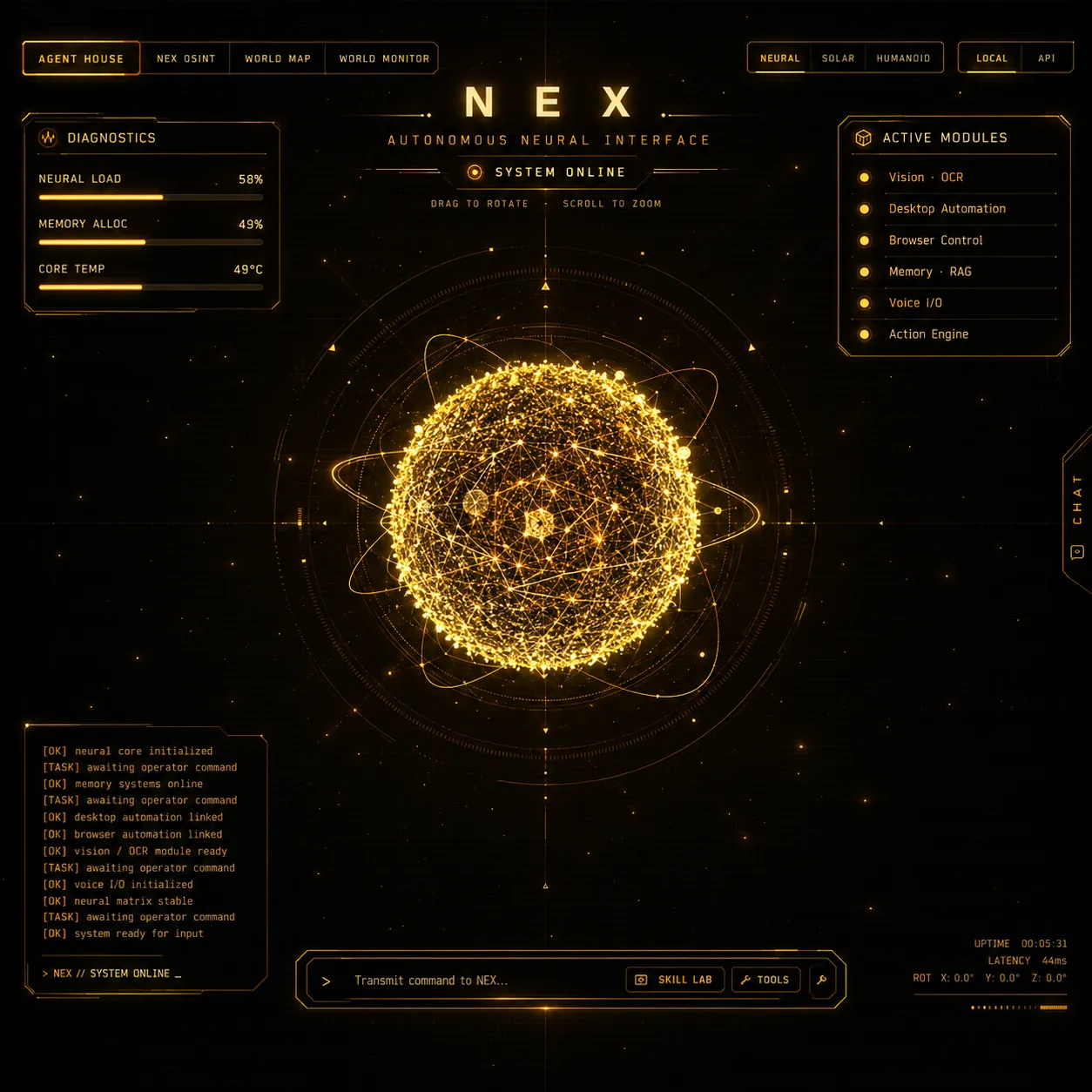
NEX AI neural core in gold theme with live system log

See NEX work on your own tasks

Book a short live demo and bring a real task from your day.